
Reviewed personally by Dr. Sunkara · Written for Trigeminal Neuralgia Treatment in Hyderabad · Updated October 2026
Quick Answer
Trigeminal neuralgia treatment in Hyderabad usually starts with medication, since anticonvulsants control the sharp, electric facial pain for most patients. When medication stops working or its side effects become unbearable, surgical options such as microvascular decompression, radiofrequency rhizotomy, glycerol injection, balloon compression and radiosurgery come into play, chosen on a case by case basis rather than in a fixed order.
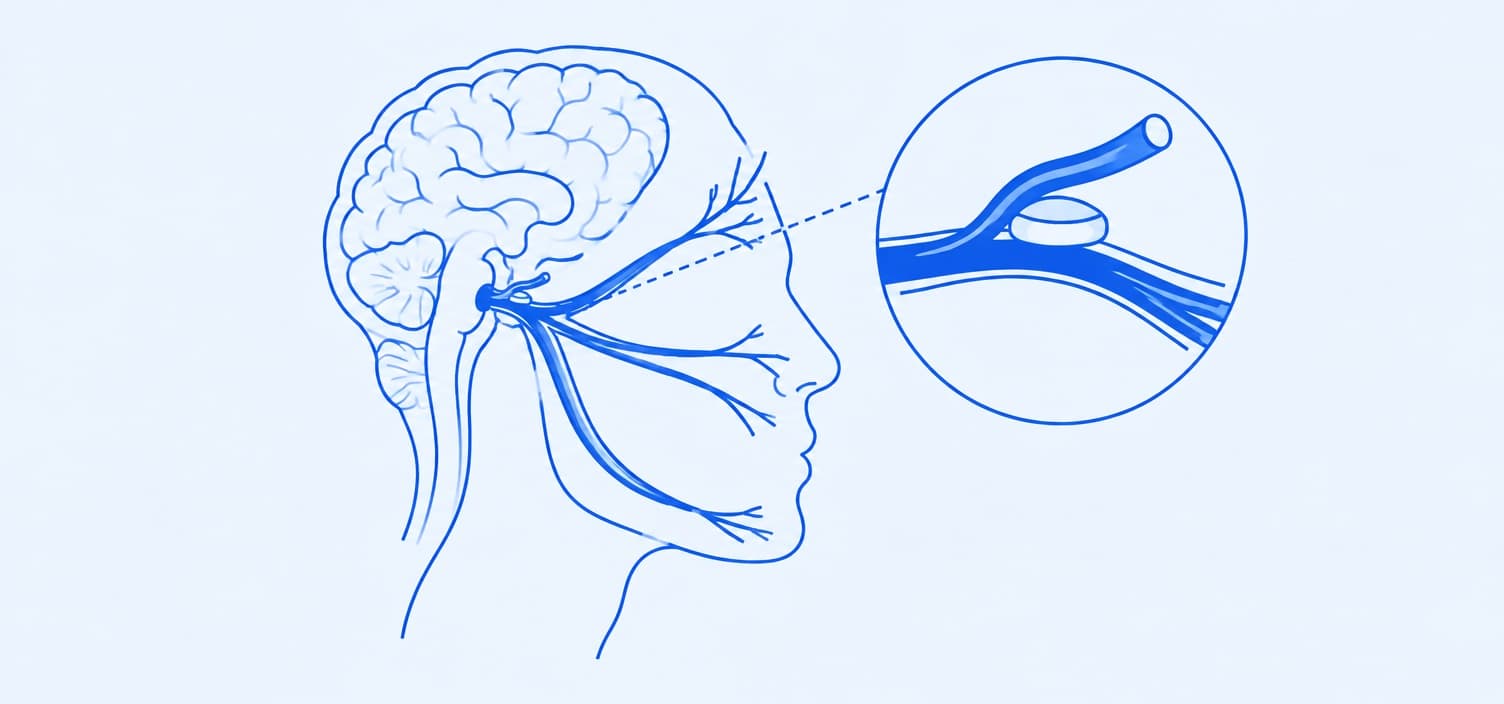
Facial pain this sharp sends most people to a neurologist long before they ever think about surgery, and that's the right instinct. Trigeminal Neuralgia walks through what's actually happening to the nerve; this page picks up from there, once medication is already part of the picture.
Not every problem needs a surgery, and trigeminal neuralgia makes that case better than most conditions. Many patients manage for years on medication alone. Surgery earns its place only when the pain outlasts the drugs, or when the side effects become the harder problem to live with.
Most people never need surgery for trigeminal neuralgia, but a handful of signs point toward considering it alongside medication, not instead of it.
01
An MRI checks for vascular compression while a trial of anticonvulsant medication tests whether drugs alone can control the pain long-term.
02
If medication isn't enough, Dr. Sunkara weighs your MRI findings, age and overall health against each surgical option before recommending one.
03
Whether it's an open MVD or a needle-based procedure, you're monitored closely afterward since both carry their own early recovery watchpoints.
What does getting ready for trigeminal neuralgia surgery actually involve? It depends heavily on which procedure you and Dr. Sunkara choose.
01
An open procedure that relocates or cushions the blood vessel pressing on the trigeminal nerve, treating the root cause rather than the symptom, and typically giving the longest pain-free stretch.
02
A heated needle selectively damages the pain-carrying nerve fibers while sparing touch sensation as much as possible. Radiofrequency Ablation covers this technique in more detail.
03
Two needle-based alternatives: glycerol is injected around the nerve, while balloon compression gently squeezes it through a thin catheter; both are quicker but their relief tends to fade sooner than MVD's.
04
A focused dose of radiation targets the nerve without any incision at all, though relief typically takes weeks to set in. Dr. Sunkara refers patients elsewhere for this option. Stereotactic Radiosurgery explains how the sessions work.
01
MVD patients are watched closely in a neuro ICU or ward bed; needle-based procedures often go home the same day or the next morning.
02
3 to 5 days is how long most MVD patients stay before discharge; needle-based procedures are often shorter.
03
Energy and normal routines come back gradually after MVD; needle-based procedure patients are often back to usual activity within days.
04
A follow-up visit checks how well the pain relief is holding and whether any numbness or other side effect is settling.
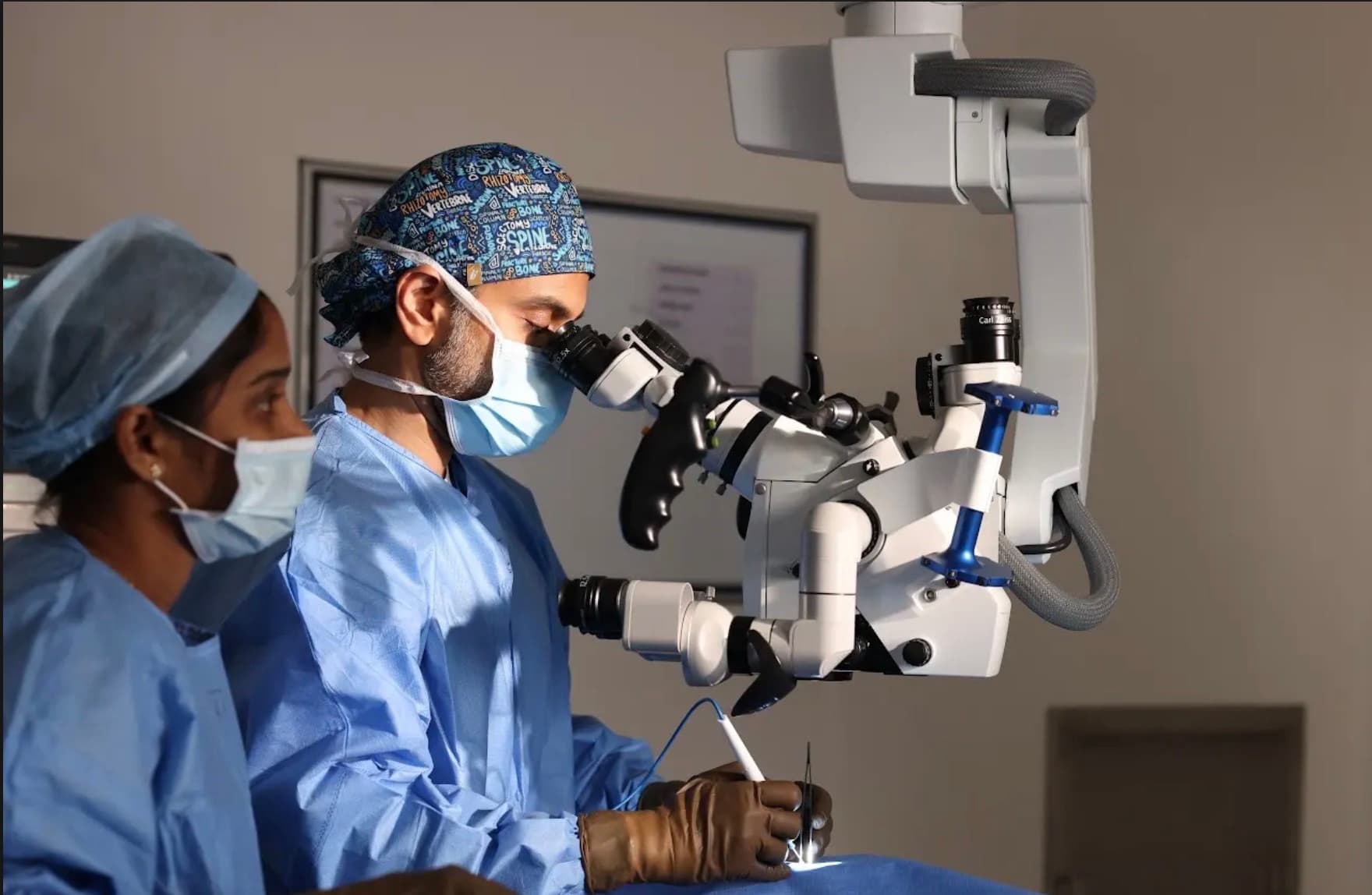
MVD's numbers come from Barker et al.'s landmark 1996 study in the New England Journal of Medicine.
Every procedure in trigeminal neuralgia treatment in Hyderabad carries real risks, whether it's open surgery or a needle-based option, though serious complications are uncommon.
What The Risks Include
It depends on your MRI findings, age and how the pain responds to medication. Dr. Sunkara reviews all of this before recommending the right treatment for you.
Whether you're still on medication, weighing trigeminal neuralgia treatment in Hyderabad, or want a second opinion on a surgery already suggested, Dr. Sunkara reviews every case personally first.

Written & reviewed by Dr. Raveesh Sunkara, Senior Consultant Neurosurgeon & Spine Surgeon · Last updated October 2026 · Next review due April 2027