
Dr. Raveesh Sunkara

What Is Spondylosis?

Schedule ConsultationCase Review

Reviewed personally by Dr. Sunkara · Written for Spondylosis & Spondylitis · Updated September 2026

Overview

Spondylosis vs Spondylitis Difference

Quick Answer

So, what is spondylosis? It's age-related wear and tear in the spine's joints and discs, most often in the neck or lower back, that shows up on scans as bone spurs and thinning discs. Spondylosis is extremely common after 40, and for many people it causes no pain at all.
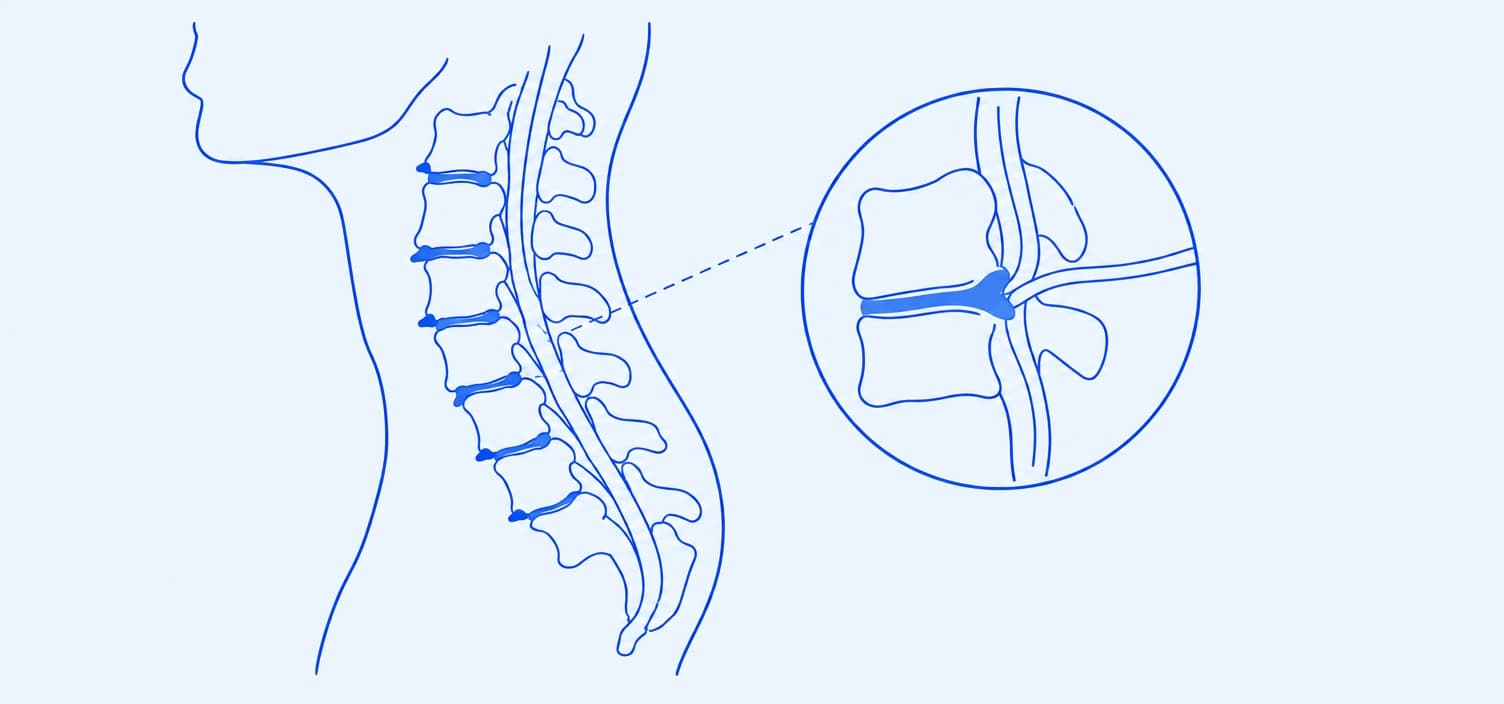
Cervical spondylosis diagram showing worn neck discs and a bone spur narrowing the space around a nerve
Cervical spondylosis: discs in the neck wear thin and small bone spurs form, which can crowd the nerves leaving the spine.

Here's the part that surprises most patients: spondylosis isn't something that suddenly appears. It builds quietly for years as the discs lose water and height, and the joints around them grow small bone spurs, called osteophytes, to steady the spine. That's why an X-ray at 50 can look worrying while the neck feels fine. The picture on the scan and the pain you feel don't always match.

Spondylosis is most common in the neck (cervical) and lower back (lumbar), usually in adults over 40. It's often confused with spondylitis, an inflammatory condition like ankylosing spondylitis, which is a different disease usually managed by a rheumatologist rather than a spine surgeon. Not every problem needs a surgery, and most spondylosis never comes close.

Types

Types of Spondylosis

Your X-ray or MRI report names spondylosis by where the wear sits. The neck and lower back take the most load, so those two are by far the most common. The fourth card covers spondylitis, a different disease.

Cervical Spondylosis

Wear in the neck's discs and joints, the most common type. It causes stiffness and sometimes pain or numbness running into the shoulder or arm.

Lumbar Spondylosis

Wear in the lower back's discs and joints, often linked to spinal stenosis as the space around the nerves narrows with age.

Thoracic Spondylosis

The least common type, affecting the mid-back. It's often picked up incidentally on scans and rarely causes major symptoms on its own.

Spondylitis (Not Spondylosis)

An inflammatory condition, like ankylosing spondylitis, that causes the spine's joints to become inflamed and stiff. It's usually managed by a rheumatologist, not a spine surgeon.

Symptoms

Signs of Spondylosis To Recognise

  • NECK STIFFNESS AND PAIN

    A dull ache or stiffness in the neck that's often worse first thing in the morning or after staying in one position too long.

  • LOWER BACK PAIN

    A persistent ache in the lower back, often easing with rest and worsening after standing or walking for a while.

  • NUMBNESS AND TINGLING

    Pins-and-needles or numbness spreading into the arms, hands, legs, or feet, a sign that a nearby nerve is being irritated.

  • REDUCED RANGE OF MOTION

    Difficulty turning the head fully or bending the back, especially noticeable when checking blind spots while driving or reaching overhead.

  • MUSCLE WEAKNESS OR GRIP CHANGES

    Weaker grip strength or clumsiness with fine tasks like buttoning a shirt, which can point to nerve or spinal cord involvement.

When To Worry

Most Cases Aren't An Emergency

Neck and back pain from worn joints usually builds slowly and settles with conservative care, so a planned visit is almost always fine. The warning signs are different: clumsy hands, unsteady walking or bladder changes can mean the spinal cord itself is being squeezed.

Seek Immediate Care If You Also Have:

Causes

Spondylosis Causes

  1. 01

    Age-Related Disc Wear

    Discs lose water and height with age, letting vertebrae move closer together and putting more strain on the joints and ligaments around them.

  2. 02

    Bone Spur Formation

    As discs thin, the spine responds by growing small bony projections called osteophytes, an attempt to add stability that can sometimes press on nearby nerves.

  3. 03

    Ligament Stiffening

    The ligaments that support the spine thicken and stiffen over the years, reducing flexibility and sometimes narrowing the space around the spinal cord.

  4. 04

    Previous Injury Or Strain

    An old neck or back injury can speed up wear in that area, so degeneration sometimes shows up earlier than the usual age-related pattern.

Who's More Likely To Get Spondylosis

  • AGE

    It's the single biggest factor. Most people show some of this wear on imaging by their sixties, whether or not it ever causes symptoms.

  • OCCUPATION

    Jobs involving repetitive neck or back movement, heavy lifting, or long hours in one posture add extra strain on the spine over time.

  • GENETICS

    A family history of early disc degeneration raises the likelihood of developing it sooner than average.

  • SMOKING

    Smoking narrows the small blood vessels feeding the discs, and smokers tend to show disc wear earlier than non-smokers.

Diagnosis

How Spondylosis Is Diagnosed

  1. 01

    History & Exam

    Dr. Sunkara starts with your story: where the pain sits, when it started, and what makes it worse. A focused exam checks your range of motion, reflexes, and strength to see whether a nerve is involved.

  2. 02

    X-Ray Or MRI

    An X-ray shows bone spurs and disc space narrowing, the classic signs of spondylosis. An MRI is added when nerve or spinal cord involvement is suspected, since it shows soft tissue in far more detail.

  3. 03

    Matching Scan To Symptoms

    Most adults over 50 show some wear on a scan, so the key question is whether it matches your symptoms. Dr. Sunkara looks for that link before suggesting any treatment.

Treatment

What Actually Helps Spondylosis

Do bone spurs on a scan mean an operation? Almost never on their own. Care starts with movement and simple measures, and steps up only if a nerve stays pinched.

  • MOST CASES

    settle with targeted neck or back exercises, posture changes and short courses of pain relief, even when the scan looks worn.

  • SOME CASES

    get a flare calmed with an image-guided injection into a worn facet joint or around an irritated nerve root.

  • FEW CASES

    need an operation, mainly when bone spurs or a thickened ligament keep squeezing the spinal cord or a nerve root.

Treatment Options Dr. Sunkara Offers

  1. 01

    Physiotherapy & Medication

    NON-SURGICAL

    A structured exercise program, posture correction, and anti-inflammatory medication that make up the first line of treatment for most people.

  2. 02

    Facet Joint Block

    NON-SURGICAL

    An injection that numbs and treats the small joints between vertebrae, useful for confirming whether they're the source of your pain and relieving it.

    About Facet Joint Blocks →
  3. 03

    Epidural Steroid Injection

    NON-SURGICAL

    Steroid placed near a nerve root pinched by bone spurs or disc wear, calming the arm or leg pain that often comes with it.

    About Epidural Injections →
  4. 04

    Minimally Invasive Spine Surgery (MISS)

    SURGICAL

    Covers options from decompression to fusion, reserved for cases with significant nerve or spinal cord compression that hasn't improved with less invasive care.

    About Spine Surgery →
Outlook

Is Spondylosis Curable?

Not in the sense of reversing the wear already on your scan, and that's a fair question to ask. This kind of wear is a normal part of aging, and the honest goal isn't erasing it. It's managing symptoms well enough that it doesn't run your life.

  • AFTER 60

    more than 85% of people show signs of cervical spondylosis on imaging, most without ever needing treatment.

  • WITH TREATMENT

    most patients see meaningful relief within 4 to 6 weeks of starting conservative care, which is why surgery is rarely the first conversation.

  • IF IGNORED

    untreated pressure on the spinal cord can leave lasting clumsiness or weakness in the hands and legs, so those red-flag signs deserve same-day care.

Living With It

Living With Spondylosis

Worn joints do better with steady, everyday care than with rest.

Dr. Raveesh Sunkara at his consultation desk, talking a patient through their condition
Before Your Appointment

Questions To Ask Your Doctor

  1. 01

    What stage of spondylosis does my scan show?

  2. 02

    Is my pain coming from spondylosis, or something else?

  3. 03

    Which exercises are safe for my neck or back right now?

  4. 04

    Are my hands or walking showing any sign of cord pressure?

  5. 05

    Could this be spondylitis instead, and would I need a rheumatologist?

Scan Report Full Of Worrying Words?

Terms like osteophytes and disc desiccation sound alarming. A second opinion explains what they mean for you.

TESTIMONIALS

Trusted By Families Across India And Abroad.

★★★★★

Review summary

Severe neck pain and left-arm numbness from a herniated disc hadn't improved with physiotherapy. After surgery the pain dropped significantly and the numbness is gone.

Srikanth J.

Cervical disc surgery

★★★★★

Review summary

Several doctors had called his brother-in-law's C4–C5 disc surgery very difficult. Dr. Sunkara's assurance gave the family confidence, and the outcome was wonderful.

Venkatesh D.

C4–C5 disc surgery

★★★★★

Review summary

Had radiofrequency disc decompression for a cervical problem and is extremely happy with the result, feeling properly informed about her care throughout.

Anjali P.

Cervical RF decompression

FAQ

Your Spondylosis Questions, Answered

Spondylosis is age-related wear and tear in the spine's discs and joints, most often in the neck or lower back. It's extremely common after 40 and often causes no symptoms at all.

Get In Touch

Told Your Spine Shows Wear And Tear?

Share your X-ray or MRI for a second opinion, or book a consultation to find out whether that wear is really what's causing your pain.

Dr. Raveesh Sunkara

Written & reviewed by Dr. Raveesh Sunkara, Senior Consultant Neurosurgeon & Spine Surgeon · Last updated September 2026 · Next review due March 2027